






Ransom note


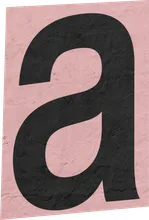
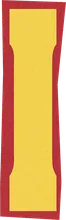
I always liked the ransom-note look, where every letter is torn from a different magazine and taped down crooked. So I took a set of real cut-out letters and made it into something you can type with.
Each character picks a random paper scrap from the set, then gets a small random tilt, bounce and size so the line reads like it was assembled by hand, not typed. Type your own note below, tune how messy it is, and re-roll to shuffle the scraps.
Playground


Text
Chaos
Layout
Code
// Ransom-note cutout manifest + per-character picker. The sprites are real torn/cut-out
// magazine letters (Resource Boy "Ransom Note Letters" pack, royalty-free), trimmed to
// their alpha bbox and downscaled to ~220px tall WebP. Each key (a character) maps to a
// handful of variants; composing a word means picking one cutout per character and
// jittering it a little so it reads like a hand-assembled ransom note.
import { mediaUrl } from "../../lib/video-sources";
import manifestJson from "../../../public/vault/ransom/manifest.json";
export type Variant = { file: string; w: number; h: number };
export type Manifest = Record<string, Variant[]>;
export const RANSOM: Manifest = manifestJson as Manifest;
// where the sprites are served from (R2 in prod, /public in dev)
export const RANSOM_BASE = "/vault/ransom/";
export function spriteUrl(file: string): string {
return mediaUrl(`${RANSOM_BASE}${file}`);
}
// Characters we have cutouts for. Everything else (space, unknown) is rendered as a gap.
export function hasGlyph(ch: string): boolean {
return RANSOM[ch] !== undefined;
}
// A small deterministic PRNG (mulberry32) so a given seed reproduces the same note — the
// hero holds a stable composition per phrase, and "Re-roll" just bumps the seed.
export function mulberry32(seed: number): () => number {
let a = seed >>> 0;
return () => {
a |= 0;
a = (a + 0x6d2b79f5) | 0;
let t = Math.imul(a ^ (a >>> 15), 1 | a);
t = (t + Math.imul(t ^ (t >>> 7), 61 | t)) ^ t;
return ((t ^ (t >>> 14)) >>> 0) / 4294967296;
};
}
// hash a string to a stable 32-bit seed (so the same phrase defaults to the same note)
export function hashSeed(s: string): number {
let h = 2166136261;
for (let i = 0; i < s.length; i++) {
h ^= s.charCodeAt(i);
h = Math.imul(h, 16777619);
}
return h >>> 0;
}
export type Placed = {
kind: "glyph" | "space";
ch: string;
variant?: Variant;
rot: number; // deg tilt
dy: number; // baseline offset, in em of the line height
scale: number; // per-letter scale multiplier
mx: number; // extra horizontal gap after (em)
depth: number; // 0..1 parallax depth (seeded) — far scraps lean less toward the cursor
};
export type JitterConfig = {
rot: number; // max |tilt| in deg
dy: number; // max baseline bounce (em)
scale: number; // scale variance (0.1 => 0.9..1.1)
gap: number; // max extra gap between letters (em)
};
export const DEFAULT_JITTER: JitterConfig = {
rot: 8, // lively but readable
dy: 0.06,
scale: 0.12,
gap: 0.05,
};
// All cutout variants available for a given character (via its manifest key), or [] if none.
// Used by click-to-swap so a scrap can flip to a *different* scrap of the same letter.
export function variantsFor(ch: string): Variant[] {
const key = keyFor(ch);
return key ? RANSOM[key] : [];
}
// Resolve a character to a manifest key. Uppercase/lowercase share a folder in the pack
// (variants already mix cases), so we upcase letters; a few symbols map to shared keys.
function keyFor(ch: string): string | null {
if (ch === " ") return null;
const up = ch.toUpperCase();
if (RANSOM[up]) return up;
if (RANSOM[ch]) return ch;
if (ch === "(" || ch === ")") return RANSOM["()"] ? "()" : null;
if (ch === "." && RANSOM[","]) return null; // no period cutout; render as a small gap
return null;
}
// Natural rendered width of a composed line at a given letter height (px). Mirrors the
// layout in RansomLine (per-letter width = aspect*scale*lineH, spaces = 0.32em, a small
// inter-item gap of 0.04em, plus each glyph's extra mx gap). Used to fit a line to one row.
export function lineWidth(placed: Placed[], lineH: number): number {
let w = 0;
const gap = lineH * 0.04;
placed.forEach((p, i) => {
if (i > 0) w += gap;
if (p.kind === "space") {
w += lineH * 0.32;
return;
}
const v = p.variant!;
w += (v.w / v.h) * (lineH * p.scale) + p.mx * lineH;
});
return w;
}
// Compose a line of text into placed cutouts using a seed. Deterministic for (text, seed).
export function composeLine(
text: string,
seed: number,
jitter: JitterConfig = DEFAULT_JITTER,
): Placed[] {
const rnd = mulberry32(seed);
const out: Placed[] = [];
for (const ch of text) {
const key = keyFor(ch);
if (!key) {
out.push({ kind: "space", ch, rot: 0, dy: 0, scale: 1, mx: 0, depth: 0 });
continue;
}
const variants = RANSOM[key];
const v = variants[Math.floor(rnd() * variants.length)];
out.push({
kind: "glyph",
ch,
variant: v,
rot: (rnd() * 2 - 1) * jitter.rot,
dy: (rnd() * 2 - 1) * jitter.dy,
scale: 1 + (rnd() * 2 - 1) * jitter.scale,
mx: rnd() * jitter.gap,
// seeded parallax depth: 0.35..1. Near scraps (→1) lean most toward the cursor,
// far ones barely move, so the taped collage gets real depth on hover.
depth: 0.35 + rnd() * 0.65,
});
}
return out;
}
Credits
MIT → free to copy